
Partition
awaits.

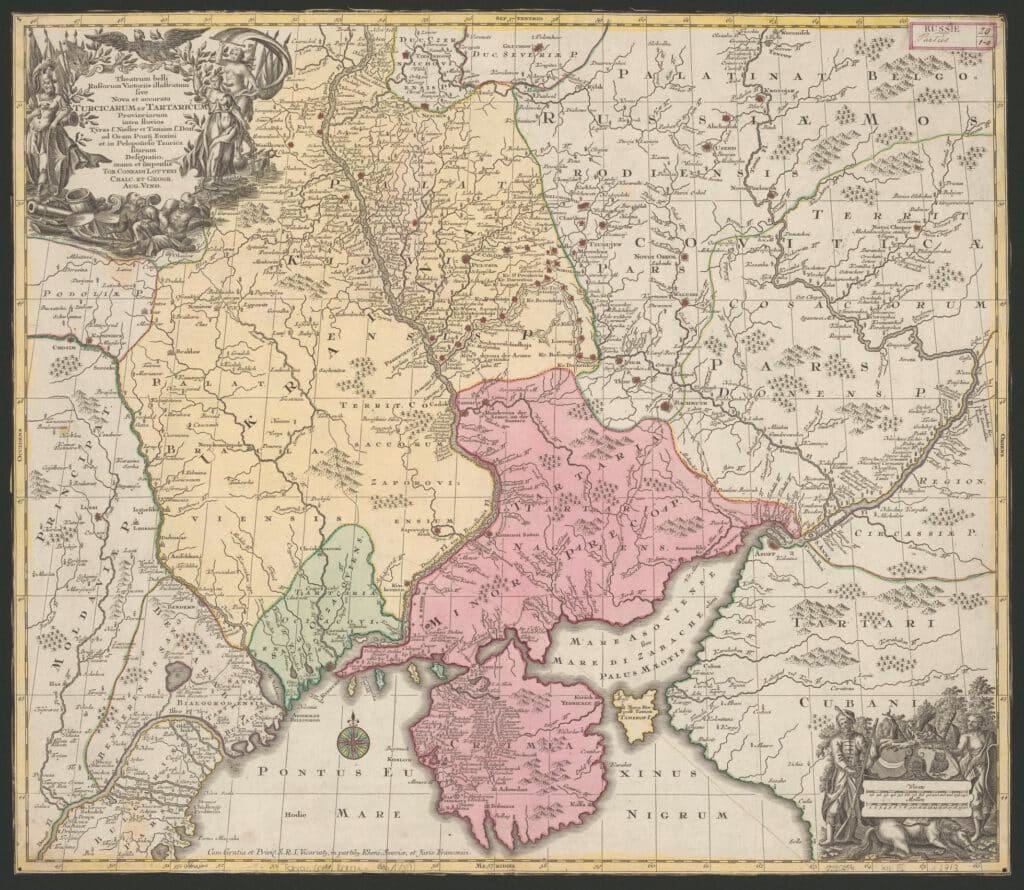
The British view of the Yalta clauses … was that citizens who had been domiciled within the pre-War (September 1939) eastern boundaries of Poland should be regarded as Polish nationals and were not to be repatriated without their consent. The Soviet authorities, on the other hand, were being difficult. They were still insisting that all citizens who originated from the territory lying east of the old Curzon line (including Polish Galicia and Lwow) were Soviet citizens and should be returned.… My immediate task was to establish the identity of the Ukrainians. Were they to be listed as ‘Polish’ or ‘Russian’ Ukrainians, or even, some of them, as true Poles? – though General Anders’s army in Italy would have nothing to do with them, and Polish friends had told me that they despised the Galicia Division as ‘Fascist bandits’.…
My preliminary findings revealed a cartographer’s nightmare. There were a number of genuine Soviet citizens in the division but, with so little time and without facilities, proper screening was impossible, and any attempt, for instance, to winkle out ‘war criminals’ (which was in any case not my concern) would have been a farce. I recommended therefore that the Ukrainian formation should be treated as a cohesive whole; and that all should be given the benefit of the doubt and classified as Polish citizens from Polish Galicia.…
A major factor leading to the reprieve of the Galician Division was its tenacious morale. The real strength of the Ukrainians lay in their cohesion, their relative literacy, and an extreme national consciousness. They had their own language, ranks, and uniform, their own religion with its Uniate cross and marvellous chants, a superb orchestra with fifty balalaika players, their own history. They prided themselves on being part of the Ukrainian freedom army and had been using Germany as an ally in their fight against Bolshevism. Without the most intimate knowledge, no outsider was entitled to sit in judgment on their loyalties and actions during the war. But they had no friends. Even the Poles had a historic grudge against them.
—Denis Hills